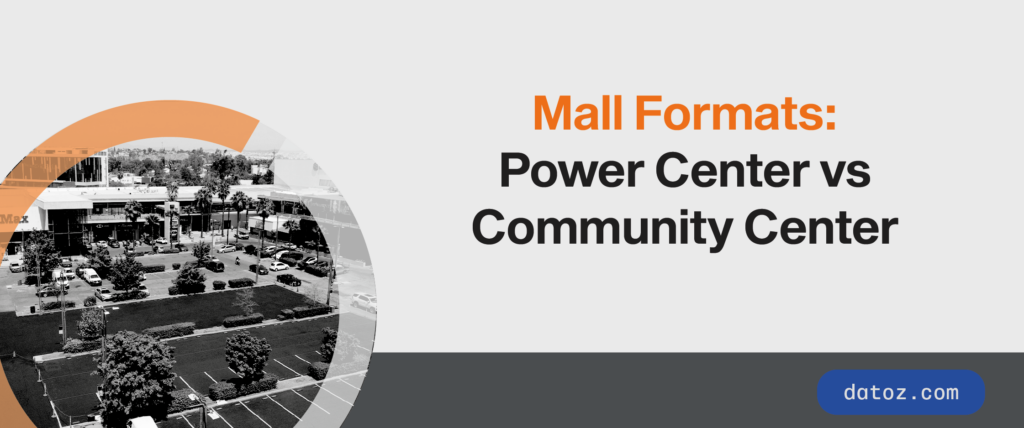
Power Centers and Community Centers are shopping mall formats that differ in scale, anchor tenant, and the type of need they fulfill: the Power Center prioritizes price and volume with large big-box anchors and discount stores, while the Community Center serves the everyday consumption needs of an immediate trade area.
A Power Center depends on vehicular traffic and price sensitivity; a Community Center depends on the population density of its immediate radius and recurring spending on everyday goods.
Power Center
The Power Center is a high-efficiency mall, strategically anchored by big-box stores and discount retailers. Its architectural design is utilitarian and streamlined, prioritizing functionality to deliver a quick and convenient shopping experience. Unlike other mall formats, this model streamlines the use of space and limits areas devoted to leisure and dining.
Its value proposition centers on capturing a pragmatic, savings-oriented market, ensuring a steady flow of visitors drawn by competitive pricing and logistical convenience. It typically brings together big-box and discount department store anchors alongside frequently used service providers.
Sentura Tlalnepantla, Puerta Texcoco, Coacalco Power Center, and Tecámac Power Center in Estado de México, as well as Galerías Tapachula in Chiapas, are some examples.
Community Center
The Community Center is a neighborhood shopping center, strategically designed to meet the daily needs of its immediate trade area. Its retail mix focuses on essential services and everyday consumer goods, ensuring steady, recurring traffic from local residents.
Thanks to a functional design that prioritizes accessibility and convenience, this format fits seamlessly into the community’s daily routine. In terms of tenant mix, it combines a supermarket or pharmacy anchor with banks, gyms, clinics, and quick-service restaurants — the typical offering for a neighborhood’s or residential development’s “weekly errands.”
Urban Center Juriquilla and Urban Center Jurica in Querétaro are some of Fibra Shop’s Community Centers.
For years, the growth of Mexican retail was measured in square meters of national inventory. Today the conversation has shifted: which format, in which area, and for which type of consumer.
If you’d like to learn more about this type of shopping center in Mexico, request your demo.